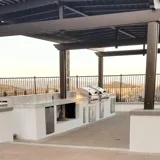
Orlando outdoor kitchens are built on the ground described below. Orlando has a humid subtropical climate: summer highs routinely push into the mid-90s F, relative humidity stays high most of the year, and afternoon thunderstorms arrive almost daily from June through September, so an outdoor kitchen gets used twelve months a year but is wet and sun-baked for much of it. Intense UV fades finishes, degrades plastics and weakens structural components over time, while heat plus humidity accelerates metal corrosion and drives mold and mildew in poorly ventilated cabinet cavities (https://riseconstruction.us/blog/florida-outdoor-kitchen-climate-ready-design-2026). The practical response in this market is a UV-stable, non-porous surface β granite, porcelain or properly sealed concrete rather than engineered quartz, which can discolor under long-term direct Florida sun β in a lighter color that absorbs less heat, with sealed seams, waterproof adhesives and 316 marine-grade stainless hardware (http://artstonesurfaces.com/outdoor-countertop-costs-in-orlando-budgets-edges-and-install-tips).
Orange County · water from Orlando Utilities Commission
Orange County · water from City of Winter Park Water & Wastewater Utilities
Osceola County · water from Toho Water Authority
Seminole County · water from City of Sanford Utility Department
Orange County · water from City of Apopka Public Services Department
Seminole County · water from City of Lake Mary Utility
Orange County · water from Orange County Utilities
Counties covered: Orange County (the Orlando metro spans Orange, Osceola and Seminole counties). Requests are routed only to licensed local outdoor-kitchen builders, and every quote should be itemised before a deposit changes hands.